
Access St. Johns County Bench Warrants
Bench warrants in St. Johns County are issued by judges in the 7th Judicial Circuit when a person misses a scheduled court appearance or violates a court order. The St. Johns County Clerk of Court and the Sheriff's Office both manage and serve these warrants from the St. Augustine area. You can search for active bench warrants through the clerk's court records system, the sheriff's warrant lookup tool, or the FDLE statewide database. All of these are public records under Florida law once served. This page covers how to check bench warrant status, what the penalties are, and how to resolve an outstanding warrant in St. Johns County.
St. Johns County Quick Facts
St. Johns County Clerk of Court
Brandon J. Patty serves as the Clerk of Court in St. Johns County. The Richard O. Watson Judicial Center is at 4010 Lewis Speedway in St. Augustine, Florida 32084. You can call (904) 819-3600 for general questions. Office hours are Monday through Friday, 8:00 AM to 5:00 PM. The St. Johns County Clerk website provides access to court records, public records requests, and case lookup tools. If you need to check on a bench warrant, the clerk staff can pull up case information by name or case number.
The St. Johns County Clerk website is shown below and provides access to court records and case information.
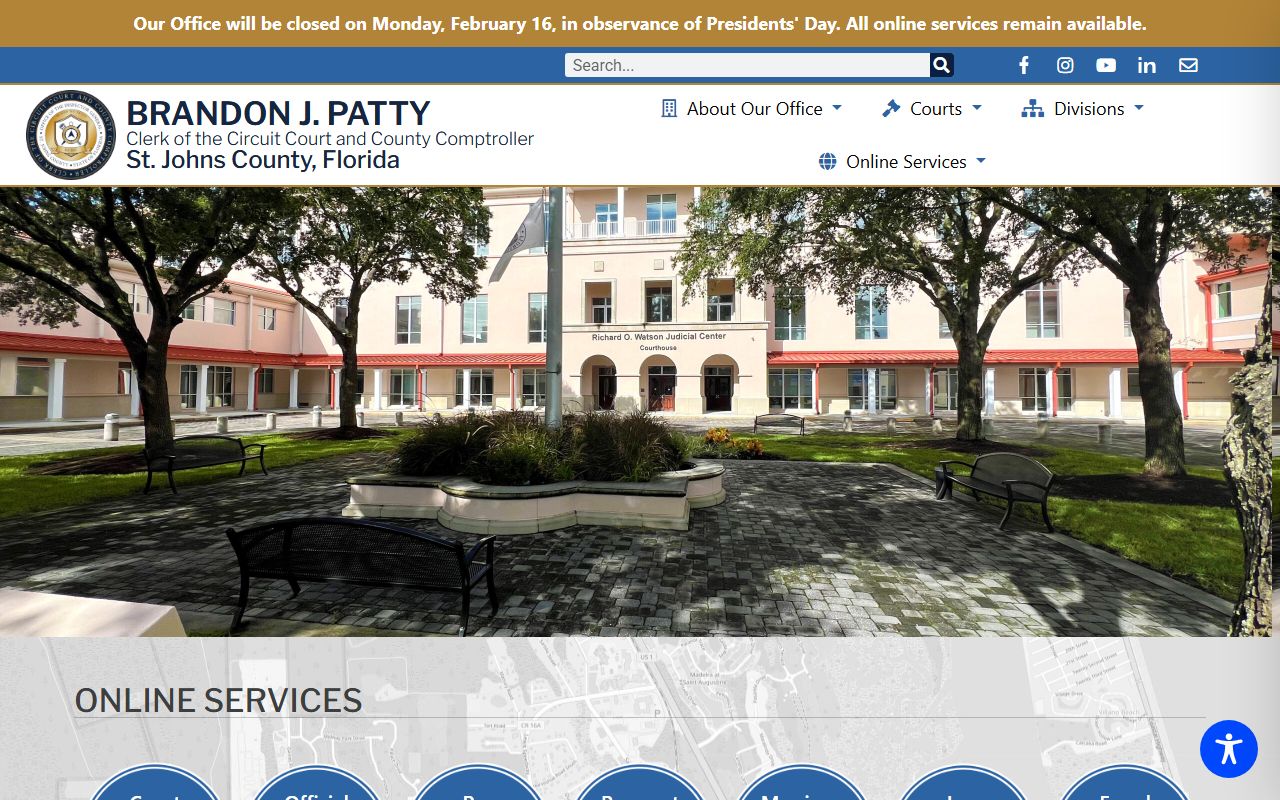
There is one important thing to know about St. Johns County. The clerk's office does not publish active warrant information on their website. Under Rule 2.420(c)(6), warrants and supporting affidavits are treated as confidential until served. Once the return of service is filed, the warrant becomes publicly disclosable. However, the clerk does not publish a list of filed returns of service either. This means you may need to search by specific name or case number to find bench warrant records in St. Johns County.
Under Florida Statute 901.02, a judge can issue a bench warrant when probable cause exists. Electronic signatures have been valid on Florida warrants since July 2013, and St. Johns County courts use this to speed up the process.
Search St. Johns County Bench Warrants Online
St. Johns County has an online court records search system. The St. Johns County online research portal gives access to modern era records from roughly the 1990s to the present. You can search by name, case number, or date. Archival records dating from 1821 to the 1990s are only available on-site at public access terminals in the courthouse. The online system covers criminal, civil, and traffic case types.
The St. Johns County court records online research page is shown here.
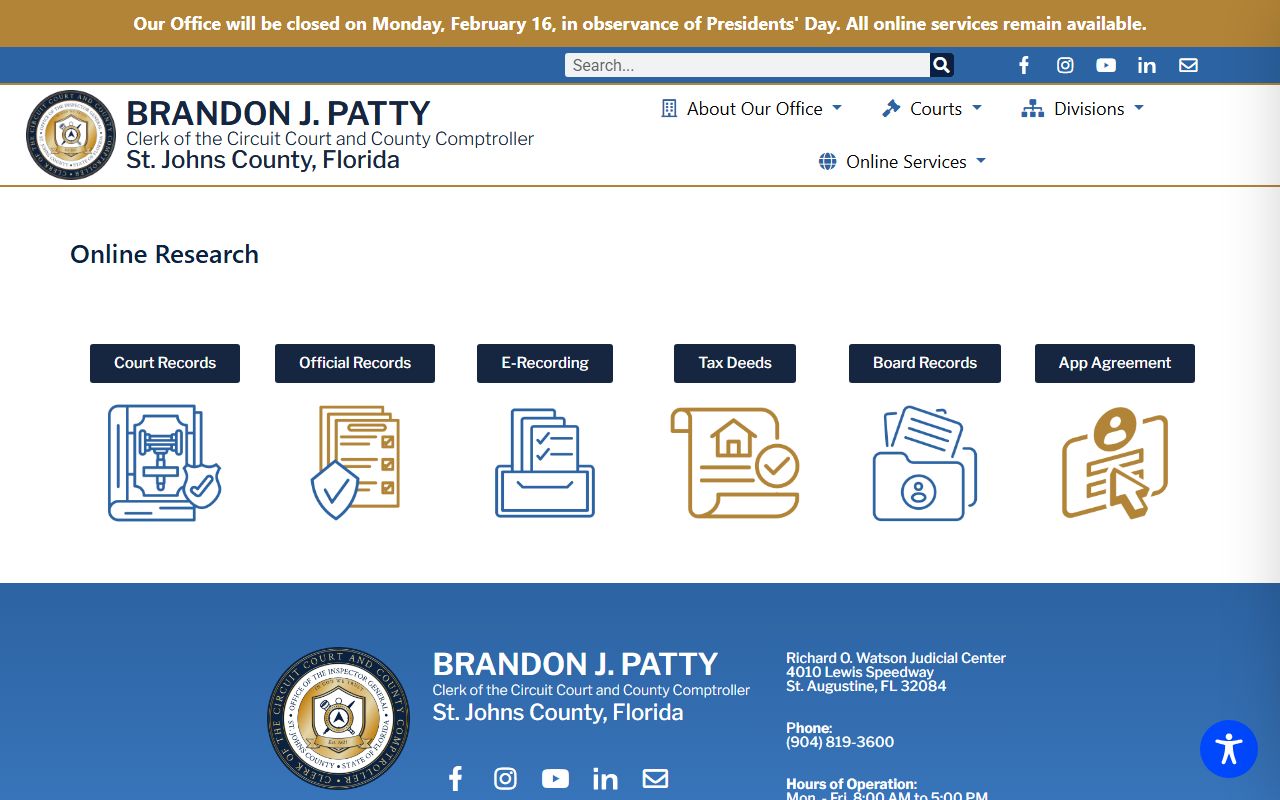
Real-time search results are available through this system. You can see case details like charges, filing dates, and case status. Keep in mind that because of the confidentiality rules around unserved warrants in St. Johns County, not all active bench warrants will appear in online searches until the return of service is filed. The system gets updated on a regular schedule.
The FDLE database at fdle.state.fl.us is another option for checking St. Johns County bench warrants. The state system pulls warrant data from all 67 Florida counties and gets updated every 24 hours. Search by first name, last name, or date of birth. The FDLE system is free and open to the public.
St. Johns County Public Records Access
The St. Johns County public records page has details about how to request court documents and other records held by the clerk. This includes bench warrant documents, case files, and court filings. Public records requests can be made in person at the courthouse, by phone, or through the clerk's website.
The St. Johns County Clerk public records page is shown below.
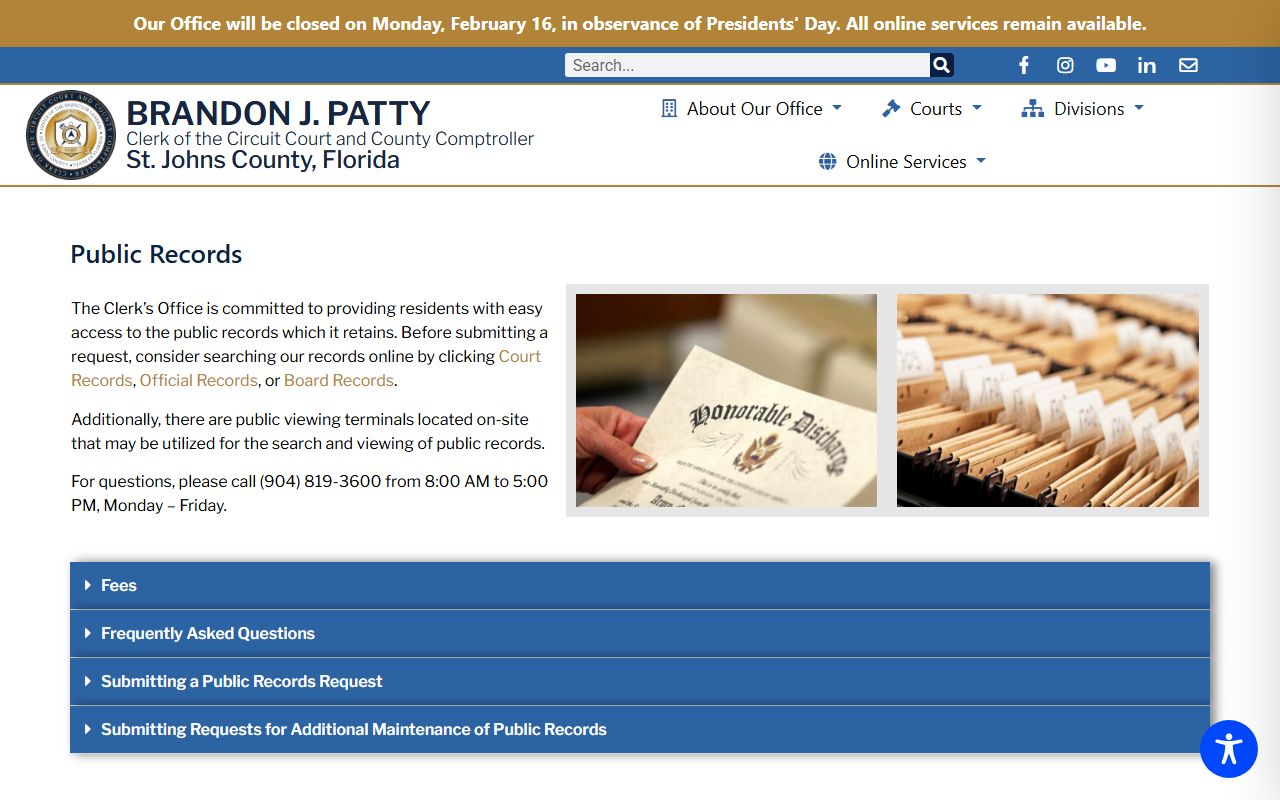
Florida's Sunshine Law, Chapter 119, makes bench warrants public records once served. Anyone can request to see them. You do not need to be part of the case. There are limits for juvenile records and sealed cases, but most bench warrants in St. Johns County are open for public access after the return of service.
Note: The St. Johns County Sheriff's warrant lookup tool on their website may be less accurate than in-person information, so calling (904) 819-3600 for confirmation is a good idea.
St. Johns County Sheriff and Warrants
The St. Johns County Sheriff's Office serves bench warrants in the county. They are at 4015 Lewis Speedway in St. Augustine, Florida 32084. You can contact them by email at cmulligan@sjso.org. The sheriff's office has a warrant lookup tool on their website, though they note it may be less accurate than calling in person. Under Florida Statute 901.04, any sheriff in the state can serve a bench warrant from St. Johns County. The arrest can happen on any day and at any time.
If you think you have a bench warrant in St. Johns County, voluntary surrender is the recommended approach. You can turn yourself in at the county jail or contact the sheriff's office first. The 7th Judicial Circuit covers St. Johns, Volusia, Flagler, and Putnam counties, so warrant data is shared across those offices. That means a bench warrant from St. Johns County can come up during an encounter with law enforcement in any of those nearby counties as well.
Bench Warrant Penalties in St. Johns County
Missing court in St. Johns County leads to added legal trouble. Under Florida Statute 843.15, failure to appear on a felony charge is a third-degree felony with up to five years in prison. Failure to appear on a misdemeanor is a first-degree misdemeanor carrying up to one year in jail. These charges are on top of the original case. The bench warrant is a separate matter from what brought you to court in the first place. St. Johns County judges do not take failure to appear lightly, and the consequences follow you until the case is resolved.
Florida bench warrants do not expire. Search warrants expire after 10 days under Florida Statute 933.05, but bench warrants stay active until the person is arrested, the judge recalls the warrant, or the subject is deceased. A bench warrant from St. Johns County years ago is still active today. It will show up in a traffic stop, at the airport, or during any law enforcement contact. Under Florida Rule of Criminal Procedure 3.730, the clerk or state attorney can prepare a direct capias to bring a person before the court for adjudication.
Resolving St. Johns County Bench Warrants
If you find out you have a bench warrant in St. Johns County, talking to a lawyer is the smart first step. A criminal defense attorney can look into your case details and help you decide the best path. They may file a motion to quash the warrant. This works best for old cases or minor charges. Going to court on your own terms is almost always better than being surprised by an arrest.
Under Florida Statute 88.3051, a court can issue a bench warrant, capias, or writ of bodily attachment when a person fails to appear after proper notice. All bench warrant records in St. Johns County become public under Chapter 119 of the Florida Statutes once the return of service is filed. The Florida Court Clerks and Comptrollers association connects all 67 county clerk offices through systems like eWarrants and CCIS, which means a St. Johns County bench warrant shows up in databases used by law enforcement across the state.
Beware of scam calls. Real law enforcement in St. Johns County will never ask for phone payments to clear a bench warrant.
Cities in St. Johns County
St. Johns County has several cities and towns. All bench warrants in the county are handled through the 7th Judicial Circuit Court in St. Augustine. No cities in St. Johns County have a population over 75,000.
Places in St. Johns County include St. Augustine, St. Augustine Beach, Ponte Vedra Beach, Hastings, and Nocatee. Bench warrants for residents of these areas are handled at the St. Johns County courthouse.
Nearby Counties
These counties border St. Johns County. Make sure your bench warrant is in the right county before you take action. Each county has its own clerk and sheriff that handle warrants.