
Search Florida Bench Warrants
Florida bench warrants are court orders. Judges issue them to bring a person into custody when they miss a court date or break a court order. The Florida Department of Law Enforcement tracks active warrants from all 67 counties in a free public database. You can search it online at any time. County clerk offices and sheriff departments keep their own bench warrant records at the local level too. These records are public in Florida. Anyone can look them up under the state Sunshine Law. Searching for a Florida bench warrant starts with the right source, and the resources on this page can help you find what you need across the state.
Florida Bench Warrants Quick Facts
Florida Bench Warrant Database
The Florida Department of Law Enforcement runs the main bench warrant database for the state. FDLE holds warrant data reported by law enforcement agencies across all 67 Florida counties. The database covers several types of warrants including bench warrants for failure to appear, direct capias warrants, arrest warrants, fugitive warrants, and violation of probation warrants. It gets updated every 24 hours. You can search by first name, last name, middle name, nickname, or date of birth. The search is free and open to the public at fdle.state.fl.us.
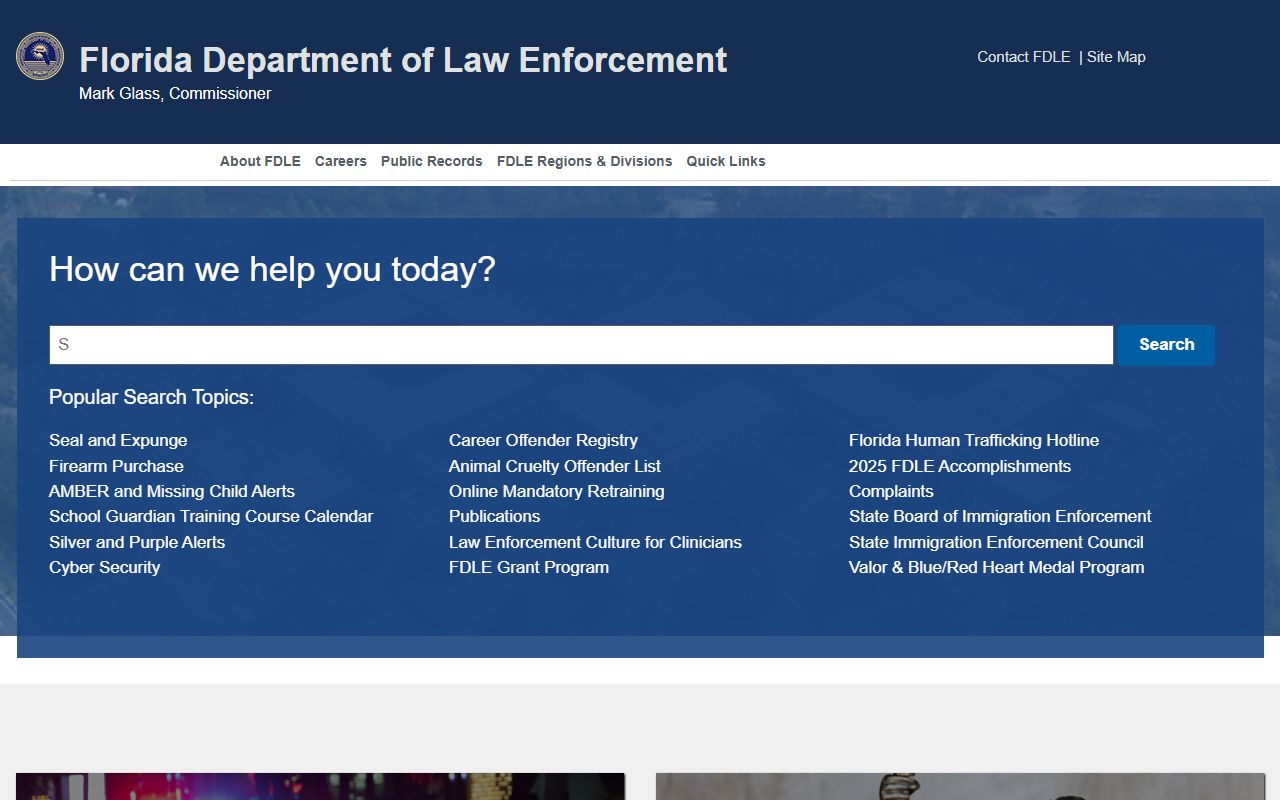
The FDLE Public Access System page for the statewide bench warrant database is shown below.
FDLE is based at 2331 Phillips Road in Tallahassee. You can call 850-410-7000 with questions. The agency also works with the National Crime Information Center to track warrants across state lines.
FDLE warns that this data should not be used as legal proof that a Florida bench warrant is active. Not all warrants show up right away. Some agencies hold what are called pocket warrants before they enter them into the system. A person listed may also be using false identification. Always check with the local clerk of court or sheriff office to confirm a bench warrant in Florida.
How Florida Bench Warrants Work
A bench warrant in Florida starts with a judge. Under Florida Statute § 901.02, a judge can issue an arrest warrant when probable cause exists. The judge signs the warrant and it becomes active right away. Electronic signatures have been valid for Florida warrants since July 2013. Once signed, law enforcement can act on it.
The most common reason for a bench warrant in Florida is failure to appear in court. Under Florida Statute § 88.3051, the court can issue a bench warrant, capias, or writ of bodily attachment when a person does not show up after proper notice. Missing a hearing, skipping a sentencing date, or ignoring a jury summons can all lead to a Florida bench warrant. Under Florida Rule of Criminal Procedure 3.730, the clerk or prosecuting attorney can prepare a direct capias to get the defendant back before the court for adjudication or sentencing.
Under Florida Statute § 901.04, any sheriff in the state can serve a bench warrant. The arrest can happen any day at any time. Officers can cross county lines through what Florida law calls fresh pursuit. This means a bench warrant issued in one Florida county can be served in any other county.
Check for Florida Bench Warrants
There are several ways to check for active bench warrants in Florida. The FDLE database is the fastest free option. Most county sheriff offices post active warrants on their websites too. The clerk of court in each Florida county keeps case records that show bench warrant status. You can also hire a criminal defense attorney to search on your behalf. This is the most private way to check for a Florida bench warrant since it keeps you out of direct contact with law enforcement.
The Florida Court Clerks & Comptrollers association connects all 67 county clerk offices across the state. Their systems play a key role in Florida bench warrant tracking.

The eWarrants system links police, state attorneys, clerks, judges, and sheriffs across Florida. The Comprehensive Case Information System tracks case data statewide. These tools help Florida agencies share bench warrant information in close to real time.
Several Florida counties run their own online bench warrant search tools. The Broward County Clerk has a public case search. Duval County runs the CORE database for court records. Miami-Dade County uses the CJIS system. The Polk County Sheriff offers a direct warrant inquiry. In Okaloosa County, you can search active warrants at the sheriff's warrant search page. The Escambia County Sheriff Warrants Unit and the Leon County Sheriff Warrants Unit also maintain online tools. Not every Florida county offers online access. For counties that do not, call the sheriff office or visit the clerk in person to check for bench warrants.
Florida Bench Warrant Penalties
Failing to appear in court is a crime in Florida. Under Florida Statute § 843.15, it is a third-degree felony if you were released on a felony charge and did not show up. It is a first-degree misdemeanor if you were released on a misdemeanor charge. These penalties come on top of the original case. A Florida bench warrant creates a new charge on your record that the court handles separately.
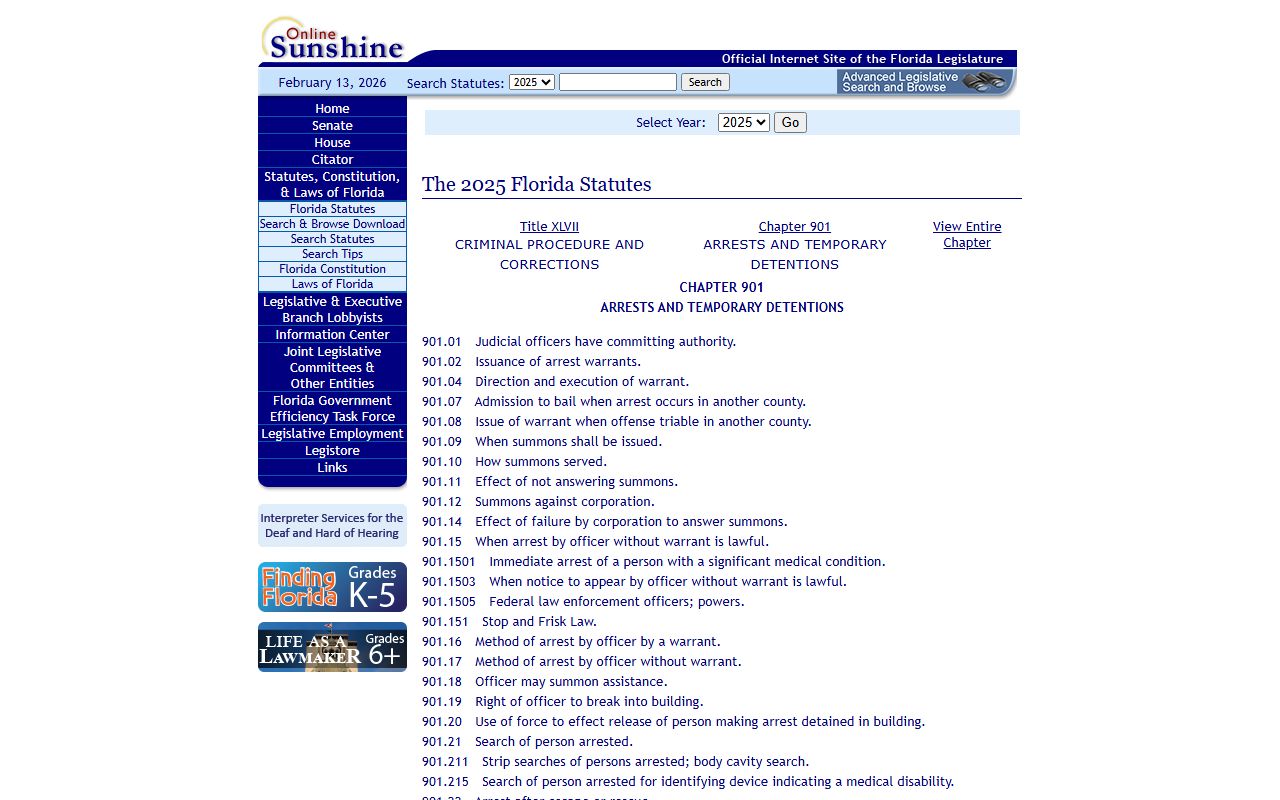
The official Florida Statutes page covering bench warrant and arrest warrant law is shown here.
Florida bench warrants do not expire. They stay active until you are arrested, a judge recalls the warrant, or the subject is deceased. This is different from search warrants in Florida, which expire after 10 days under Florida Statute § 933.05. A bench warrant from years ago is still valid today.
Bench warrant records in Florida are public under the Sunshine Law, Chapter 119 of the Florida Statutes. There are a few limits. Unexecuted search warrants and their affidavits stay sealed until served. Juvenile records have extra protections. But most Florida bench warrants are open for anyone to search. Once a return of service is filed, the warrant becomes part of the public court record in Florida.
Note: Some bench warrants may not show up in online databases right away due to processing delays between Florida agencies.
Resolving a Florida Bench Warrant
If you think you have a bench warrant in Florida, start by checking. Use the FDLE database or your county clerk website. Confirm the warrant is real. Do not assume phone calls about warrants are true. Scammers in Florida call people claiming they have bench warrants and demand payment over the phone. Real warrants never require phone payments. No law enforcement agency in Florida will ask for gift cards, wire transfers, or cryptocurrency to clear a bench warrant.
Contact a criminal defense attorney before you do anything else. A lawyer can search for Florida bench warrants on your behalf without putting you at risk. They can arrange a voluntary surrender with the court. Turning yourself in on a bench warrant often leads to better outcomes than getting picked up on the street. Florida courts tend to view voluntary surrender more favorably. An attorney may also file a motion to quash the bench warrant in certain cases, such as old warrants, mistaken identity, or minor offenses in Florida.
Watch for these signs of a bench warrant scam in Florida:
- Calls that demand payment by gift card or wire transfer
- Threats of immediate arrest unless you pay right now
- Refusal to give a case number or court information
- Callers who claim to be from the sheriff but use a blocked number
Always verify bench warrant claims through the sheriff non-emergency line or the clerk of court website in your Florida county. The Florida Courts e-Filing Portal can also help you access case information.
Browse Florida Bench Warrants by County
Each Florida county has its own clerk of court and sheriff office that handle bench warrants. Pick a county below to find local warrant search tools and contact info.
Florida Bench Warrants by City
Residents of major Florida cities can check for bench warrants through their county court system. Pick a city below for local resources.